"I think you knew her best when you understood that you didn't understand, when you realized that she was to everybody what everybody wanted her to be. She was a brilliant chameleon."
Liza Minnelli
"Judy Garland was just a normal abnormal great talent."
Mickey Rooney
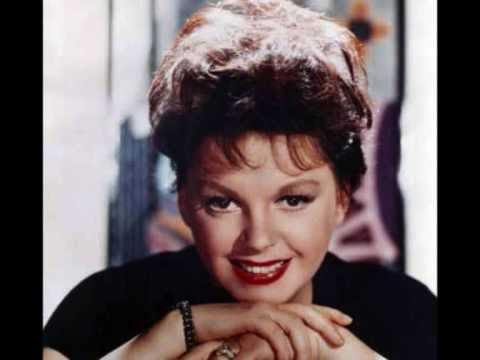
Documentaries about beloved show business personalities tend to be either overly worshipful or gleefully iconoclastic. The best such programs manage to present a balanced, overview of the individual. The BBC Ominbus production JUDY: IMPRESSSIONS OF GARLAND, which debuted three years after the singer's tragic death in 1969 at the age of forty-seven, is an excellent, unsentimental, straightforward look at her life and career. The two quotes listed above were provided by the two people who probably knew Judy Garland better than anyone else: her oldest daughter, Liza Minnelli, and her friend and most frequent collaborator, Mickey Rooney. They share their stories and memories with love and humor, as do the other interviewees, Garland's show business colleagues and friends, some of whom knew her as a child.
From her years as an MGM contract player (1935-1950), there are memories from producers Arthur Freed and Joe Pasternak, lyricist E.Y. Harburg (THE WIZARD OF OZ), co-stars Peter Lawford and Ray Bolger, and Dottie Ponedel, her personal makeup artist and friend. Vincente Minnelli, her second husband and frequent director, provides some insightful comments about Garland's experience as a child star, saying that "it was a dreadful thing to grow up in that atmosphere". Charles Walters, the director and choreographer who worked with Garland and was a close friend, has some of the best stories to tell. One rather surprising thing he says is that Garland started taking singing lessons during the last five years of her life in order to preserve her voice because that was her "rent money".
Other individuals interviewed include George Folsey, a cameraman at MGM, Mort Lindsey, her frequent conductor and arranger, and Mickey Deans, her fifth husband. Also included are two dedicated Garland fans: Wayne Martin, who turned his home into "Judyland", a storehouse of Garland memorabilia, and fan club founder Albert Poland, who discusses Garland's status as a gay icon during the 1950's and 1960's. Actor Dirk Bogarde is also interviewed. He was a close personal friend and also co-starred with Judy in her final film I COULD GO ON SINGING (1963).
A dramatic scene from I COULD GO ON SINGING with Dirk Bogarde and Judy Garland.
Bogarde obviously had a lot of love and respect for Garland, but he is honest about the difficulties she caused for the cast and crew during the making of the film. In spite of those difficulties, he praised her work as an actress. A clip from a crucial scene from the film is included in the documentary. In the scene, singing star Jennie Bowman (Garland) is confronted by her former lover (Bogarde), who tries to convince her to go to the theater where she is already hours late for a concert. It was a true-to-life situation for the singer. Jennie swears that she's not going to the theater "ever, ever again", and that "It's not worth all the deaths that I have to die." And she asks: "Do you think you can make me sing? You can get me there, sure, but can you make me sing?" As Bogarde describes the scene:
"That was the actual woman saying the actual truth, acting it brilliantly, and being it, which is a very different thing. She knew exactly that it was a playing scene, but it was about her. It was her."
Indeed, this scene is one of the best examples of Garland's acting talent in her entire career. It goes on for over three minutes, an unbroken, unedited stream of emotional dialogue between the two characters. Her work in this film is so marvelous, both the dramatic scenes and the musical numbers, that it makes a memorable finish to her film career. Other segments from the film are included, as well as clips from many of the actress's musical films.
Judy performs "A Great Lady Has An Interview" in ZIEGFELD FOLLIES (1946).
One of the biggest treats in the documentary is the entire "Get Happy" number from SUMMER STOCK (1950), Judy's last film at MGM.
The documentary also chronicles her post-MGM years as a concert performer. Judy Garland left MGM in 1950 after making twenty-seven films in fourteen years. She was twenty-eight years old. In 1951 she debuted at the London Palladium. This was followed by a nineteen-week engagement at the Palace Theater in New York. More legendary triumphs would follow over the years, including two Academy Award nominations and an amazing comeback concert at Carnegie Hall in 1961.
For those who love Judy Garland, this documentary will provide a perfect tribute. And for those who aren't familiar with the scope of her career beyond yearly viewings of THE WIZARD OF OZ, this is a wonderful way to get to know her. The final interview segment is, fittingly, from Liza:
"All I know is, she was always alive. She still is. I don't think she'll ever die, and I don't think we'll ever find out exactly everything about her. I don't want to. She's a marvelous mosaic to me of places and times and love and anguish, all of the supreme feelings that are allowed only to human beings. She was a monster person. Totally human."
Imagine for a moment that you are a movie fan in the year 1944. Now imagine that you've just heard of a new film from Universal Pictures called CHRISTMAS HOLIDAY starring Deanna Durbin, one of the most popular musical personalities of the day, and Gene Kelly, the dancing sensation of FOR ME AND MY GAL (1942) and COVER GIRL (1944). Because of the title and the two stars, the average movie goer would most likely be expecting a pleasant, sentimental musical. The very last thing that same movie goer might be expecting is a moody, downbeat Film Noir about obsessive relationships and murder.
Of course, movie fans might get a clue that this isn't your standard musical when they learn that the story is based on a novel by W. Somerset Maugham, and that the director is Robert Siodmak, the German Expressionist who had also directed SON OF DRACULA (1943) and PHANTOM LADY (1944) at Universal. What's more, the film was released during the summer, not at Christmas time.
Deanna Durbin was Universal's top box office star at the time. The operatic prodigy had signed with MGM in 1935 for a specific film that ended up not being made. The studio, not knowing what else to do with a fourteen year old girl who sang like an adult diva, cast her in a short subject called EVERY SUNDAY. Her co-star in this little epic was Judy Garland, another child prodigy with a big, adult singing voice. EVERY SUNDAY showcased the two youngsters beautifully, with Durbin singing opera and thirteen year old Garland singing swing. For some reason, MGM decided to drop Durbin and keep Garland, an action that some credit to a misunderstood directive from studio mogul Louis B. Mayer. Durbin was immediately signed by Universal and became an overnight star in a picture called THREE SMART GIRLS (1936). A series of similar pictures continued to showcase that extraordinary voice as well as Durbin's warmth and sincerity as she grew from a fetching teenager into a lovely young woman. But by the mid-1940's, the star was eager to do a different kind of role other than "Little Miss Fix-it who bursts into song", as she herself would describe her screen persona. So Universal gave their musical darling her big chance at drama with CHRISTMAS HOLIDAY, and, while she has real talent as an actress, the results are mixed.
The novel by Maugham had been substantially reworked by screen writer Herman J. Mankiewicz. The story begins with Lt. Charles Mason (Dean Harens) on his way to San Francisco for Christmas leave when his plane is forced to land in New Orleans. He is invited to visit a night club/brothel where he meets singer and "hostess" Jackie Lamont. She asks him to take her to a Christmas Eve Midnight Mass. While there, Jackie is overcome with emotion and falls to her knees, weeping. After the Mass, the two go to a coffee shop where Jackie begins telling Lt. Mason her story. Her real name is Abigail Manette. Her husband, Robert (Gene Kelly), is in prison for killing a bookie. She tells Mason how she and her husband met, got married, and lived with his mother (Gale Sondergaard), and how her marriage began to fall apart when Robert refused to give up his gambling habit. When he was convicted of murder and sent to prison for life, his mother blamed Abigail. Alone and filled with grief and despair, Abigail went to work at the brothel. Robert breaks out of prison and intends to kill his wife for what he calls her "unfaithfulness". Abigail tells Robert she went to work at the brothel so that she, too, would be in a kind of prison. The police shoot and kill Robert, and Abigail is finally free from her past.
Since this was 1944 and the Motion Picture Code was in full force, the place where Jackie/Abigail works is simply called a night club and the women are called hostesses. This little trick of terminology had been used in other films, notably the 1937 Bette Davis classic MARKED WOMAN at Warner Brothers. Since Jackie is a singer, it isn't clear what the rest of her job description might include. The owner of the club, Valerie de Merode (Gladys George), acts more like a den mother than a madam. But the film's introduction to the night club leaves little ambiguity as to what kind of "club" it is, with women sitting around tables being approached by men, women seen going upstairs, and the overall sleazy atmosphere. Durbin's fans were shocked to see her in a movie like this. Surprisingly, it was a financial success. But Miss Durbin would never get a chance like this again.
There are many good things going on in this film. The black and white cinematography by Woody Bredell is sensational. Bredell had shot some of Universal's best films, such as GHOST OF FRANKENSTEIN (1942) and the aforementioned PHANTOM LADY. He also worked with Deanna Durbin several times. Bredell imbues the film with a strong Noir sensibility. When we first enter the club, it is shrouded in a moody darkness that contrasts with the opening scenes of the film that are lit in a normal, innocuous manner. Our entrance into the nightclub signifies our emergence into a Noir universe. The camera prowls through the darkness until we reach a table where several women are seated. One of the women, who has her back to us, gets up and walks to the stage. She turns around to face the microphone, and only then do we realize that the women is Deanna Durbin. A very interesting way for a film to introduce such a major star.
The film's climactic ending also takes place at the club. After Robert is shot, the focus is completely on Abigail.As she looks up at the stars, the lovely, tear-stained face of Miss Durbin is bathed in an increasing amount of celestial light, showing us that Abigail's dark obsession, i.e., her love for her no good husband, has ended. As she gazes heavenward, there are two shots of the night sky, with the clouds parting so the light from the stars can shine through. I assume these were stock shots that Universal kept available for other movies. I couldn't help wondering if these shots had been used for The Wolf Man series, with Lon Chaney, Jr., and not Deanna Durbin, looking up to see if the moon was full. In any other Durbin movie, one would have expected her to start singing. In this movie, I half expected her to turn into a werewolf. She does neither.
Miss Durbin does sing in CHRISTMAS HOLIDAY, however. When she is first introduced in the club scene, she sings a song called "Spring Will Be A Little Late This Year". She also sings the Irving Berlin tune "Always", first in a situational setting at the Manette home, and later at the club.
The problems with the film are not the fault of the actors. Everyone does a good job with their roles. Gene Kelly is completely believable as the weak, flawed, but handsome and seductive husband. There was always a slightly roguish edge to the characters Kelly played in his film career, and he is perfectly cast here. Gale Sondergaard is sublimely over dramatic as Robert's possessive mother. In fact, when her character is introduced, we suddenly enter into a different movie. Robert brings Abigail home to meet Mother and we soon learn that the handsome, cheerful man Abigail has fallen for is actually a very messed up individual. Mother Manette uses a cryptic tone while telling Abigail about "certain traits" Robert has, and her hope that together she and Abigail can "save" him.
And therein lies the biggest problem with the film. Robert Manette is really the central character, since his misdeeds, and everyone's reactions to them, are the source of all the drama. But the heart of the character, as written into the novel, has been cut out. I haven't read the novel, but my understanding is that Robert had homosexual tendencies, as well as an obsessive, almost incestuous connection with his mother. Since neither of these ideas could be explored in the cinema of the time, the script reduced his "certain traits" to a weakness for gambling and violence. That particular weakness could certainly be used to generate drama and tragedy in a Film Noir. But a propensity toward gambling doesn't seem to warrant the overwrought emotion of the mother or the moral descent of the wife.
Something else happens after Mother Manette is introduced. Abigail, having been accepted by Robert's mother as the daughter-in-law who will join her in "saving" her wayward son, is immediately recast as Robert's second mother.From this point on, Durbin is almost as matronly as Sondergaard. It's easy to understand Robert's growing frustration. In one amazing scene at the Manette home, when everything is still going alright with the marriage, we see a perfect display of domestic bliss. Robert is at the piano and Abigail is standing behind him singing "Always". She folds her arms around his neck. From the angle of Robert's head and the look on his face, she seems to be strangling him. Mother Manette, sitting close by, knits furiously as she looks on with approval. Poor Robert doesn't stand a chance.
There are other problems with the character of Abigail. And I don't necessarily blame Miss Durbin. Some of Abigail's dialogue simply doesn't come off as believable. In her early scenes, Durbin is convincing and terribly moving. But when she begins to tell her story, leading into the classic Noir flashback segment, her lines seem contrived and unnatural. As for directorial mishaps, there is a later scene that, I feel, plays quite badly. When Robert's trial has ended with him being found guilty, Abigail and his mother leave the courtroom together. For some strange reason they look like two soldiers marching swiftly in perfect cadence. Then, suddenly, Mother Manette stops, whips Abigail around, and slaps her hard across the face, proclaiming: "You killed him!!", and walking away. I can't help thinking this scene should have either been redone or left on the cutting room floor. To be fair, though, this awkward scene does help to prove what a delusional monster Mother Manette really is.
Contributing to the look of the film is the use of locations. The authentic footage of the beautiful Latin Mass is followed later on by a classical music concert in a large hall. The sets designed to look like old New Orleans, especially the decaying elegance of the Manette home, are done very well.
CHRISTMAS HOLIDAY is definitely worth seeing. As a serious drama filmed in the Noir style, it has much to offer in the way of atmosphere and cinematography. Film buffs interested in the work of Robert Siodmak will certainly appreciate it. As for Deanna Durbin, she went right back to musicals after this movie. In 1945 she would star in the marvelous LADY ON A TRAIN, a perfect mixture of music, comedy, and mystery that showcased the very best of her talents.
I went to see this film with a sense of trepidation, not knowing what to expect. Was Renee Zellweger going to attempt a full blown masquerade as legendary singer/actress Judy Garland in the manner of Fay Dunaway's portrayal of Joan Crawford in MOMMIE DEAREST (1981)? And, if so, would she fail utterly and deliver a cringe worthy imitation of Garland as opposed to Dunaway's almost eerie spot on personification of Crawford?
And what about the story itself? Would it dwell on some of the more tragic aspects of Garland's life in the interest of sensationalism, or offer a more balanced, sympathetic approach?
It came as a very pleasant surprise that the film did manage to present a positive, balanced portrayal of Garland. Although I don't agree with some critics who consider the film to be the "definitive" story of her life, I found myself engrossed in the story from start to finish. As for Miss Zellweger, let me just say that she did not bring Judy Garland to life for me. But then, I honestly doubt that any actress in the world would be able to accomplish such a feat. The problem for me is that Judy Garland is so unique, so iconic, and so alive in my memory, that no one else could ever approach her. That holds true not only for her amazing talents as a professional entertainer, but for her personality as well. However, Zellweger did give a sincere, moving performance, and she deserves credit for the hard work she put into it.
The film was directed by Rupert Gold and based on Peter Quilter's play END OF THE RAINBOW. The story follows Miss Garland during the final year of her life. (She died in 1969 at the age of 47.) For die hard Garland fans like myself, the details are all too familiar. We see the singer experiencing difficulties with her health, making her increasingly unreliable as a performer. And we see her having financial troubles that leave her practically homeless when she gets thrown out of hotels for not paying the bills. Her last resort is to take her two young children, Lorna and Joe, back to their father, Sid Luft (Rufus Sewell), from whom she is divorced. While battling Luft for child custody, she reluctantly travels to London for a series of concerts at The Talk of The Town that she hopes will solve her financial woes. Before leaving, she meets a young man named Mickey Deans (Finn Wittrock), who will become her fifth and final husband. Garland's health problems and unreliability follow her across the sea, unfortunately, and she is unable to complete her singing engagement. But at the last minute she comes through and gives one final, riveting performance.
As I said previously, Renee Zellweger gives her performance everything she's got, not just as an actress, but also as a singer. Naturally, no one has ever had a voice like Judy Garland's, but Zellweger manages to impress. She must have studied many of Garland's television performances, because she mimics many of the singer's trademark stage movements, such as Garland's peculiar habit of throwing the microphone cord over one shoulder and almost wrapping herself up in it. The final song is, of course, Over The Rainbow, which provides a truly moving, emotional ending to the film.
The movie actually begins with the Young Judy (Darci Shaw) working at MGM under the strict control of her mother, Ethel Gumm (Natasha Powell), and studio head Louie B. Mayer (Richard Cordery). Mr. Mayer is portrayed a mind controlling sadist with sexual designs on his young contract player, while Mrs. Gumm appears to have graduated from the Nazi School of Motherhood. She treats her daughter as a commodity, forcing Judy to keep a cruelly strict diet while also giving her the amphetamines and sleeping pills that would cause a lifelong addiction. These somewhat distorted details are based on a combination of Garland's real life experiences and exaggerated legends about those experiences. Many of the exaggerations came from Garland herself. Whatever the real truth might be, these details add great dramatic effect to the story. We also see the young Judy interacting with her frequent co-star and close friend, Mickey Rooney (Gus Barry). In one scene, she has a huge crush on Rooney, but he rebuffs her and says she is just his "pal". In a later scene, after the two have just finished a stage performance, Mickey invites Judy out for dinner. For a moment she looks at him with a sense of longing. But then she turns away from him and looks back toward the stage. Hearing the applause and shouts from the audience, Judy's face lights up. It's as though she realizes that the stage is the one and only place where she will find true love and affirmation. It's one of the best moments in the film.
For those of you who may not be familiar with the magic of Judy Garland, apart from THE WIZARD OF OZ, let this biopic be a stepping stone to experiencing the real legend. Find some of her classic films, such as MEET ME IN ST. LOUIS (1944) or EASTER PARADE (1948). Watch A STAR IS BORN (1954) and I COULD GO ON SINGING (1963), which feature not only some of her best singing, but also showcase her true power as a dramatic actress. Or listen to her records, especially JUDY GARLAND AT CARNEGIE HALL (1961), possibly the greatest and most successful one woman concert in history.
There are many things to like about this movie. There is so much more to like, and indeed love, about the incredible Judy Garland. Don't stop here. Keep exploring!


.jpg)
.jpg)
.jpg)
.jpg)
.jpg)


