FILM REVIEWS, COLLECTION UPDATES, COMMENTS ON CINEMATIC CULTURE

Thursday, September 26, 2024

THE AMITYVILLE HORROR (1979)


It's fun to revisit movies I remember enjoying from years past, not only for the quality of the technique and the performances, but for the fond memories of the theater-going experience. Going to see THE AMITYVILLE HORROR in 1979 in a crowded theater was a real trip. So many jump scare moments where the entire audience reacted at exactly the same time, usually followed by embarrassed laughter. Well, maybe some people were laughing. Many others were shaking in their shoes at what was happening on the screen. This was a well-crafted horror film that seemed to take itself very seriously. In a decade where audiences had already been traumatized by THE EXORCIST (1973) and THE OMEN (1976), demonic forces were big business, and the Hollywood money machine made a lucrative deal with the devil that paid off quite handsomely. 

The film, directed by Stuart Rosenberg, was based on the 1977 novel, The Amityville Horror, by Jay Anson. It told the story of paranormal experiences endured by George and Kathy Lutz and their three children, who lived for twenty-eight days in a house in Amityville, New York, where a notorious mass murder had occurred a few years before. The Lutz's claimed they were forced to flee in terror from the house, although there has been a lot of skepticism over the years regarding those claims. The book was a best seller.

I haven't read the novel, so I don't know what changes were made in Sandor Stern's screenplay. James Brolin and Margo Kidder portray George and Kathy Lutz, along with Rod Steiger, Don Stroud, Helen Shaver, Michael Sacks, Amy Wright, John Larch, Murray Hamilton and Irene Daley. 


Although I'd rewatched this film a few times on cable back in the 1980's and 90's, and knew everything that was going to happen, it was always an enjoyable watch. The film is practically free of violence, a big plus for me, and quite surprising, considering the subject matter and the era in which it was made. And Brolin and Kidder are both talented, likeable actors. So, when I recently found a used DVD copy at a flea market for two bucks, I gladly picked it up.

 Chalk it up to the cynicism that comes with advanced age, or over saturation with the horror genre, but watching the film this time around proved to be more of a laugh fest than anything else. It started with Lalo Schifrin's theme music. The voices of children singing "La-la" were combined with discordant, unsettling music and replayed incessantly throughout the movie. This gimmick may have been considered creepy at the time, but now comes off as a cliche or even a parody. The film also seemed to move along too fast with its possession theme. Almost as soon as the family has moved into the accursed abode, Dad begins to take on the appearance and personality of Charlie Manson on a really bad day. And Mom is waking up in the middle of the night screaming: "He shot her in the HEAD!!!" Not to mention the youngest daughter taking up with a demonic imaginary (?) friend who obviously doesn't have the family's best interests at heart. 

Acclaimed actor Rod Steiger does his Method actor best as a priest, also Kidder's uncle, who comes over to bless the house and is beset by a satanic swarm of flies. Watching this sequence after so many years, I wondered why I didn't see how ridiculous it was. But the movie and its evil entities aren't yet finished with Steiger. As the enterprising Amityville demons have apparently taken control of the telephone lines, the concerned priest is unable to call Kidder to warn her about the flies, and presumably other possible problems. So, he goes into his church to offer prayers at the altar, only to have the aforementioned demonic forces use their far-reaching powers shake up the place, literally, and cause a piece of falling plaster from an overhead angel to blind him. When we last see Father Steiger, he's sitting on a park bench looking bewildered and defeated. It's not clear if he's acting or just exhausted from making this movie. 

Since Kidder's character is a Catholic, some boneheaded wardrobe mistress thought it would be a good idea to show this married mother of three children dressed in what appears to be a typical Catholic schoolgirl's uniform of the era, in a scene where she's just come home with a load of groceries. I remember this rather bizarre clothing choice being mentioned by at least one critic when the film was first released. But the biggest laugh of all is when Helen Shaver visits the house of horror for the first time. Shaver's character, apparently gifted with more psychic abilities than all the witches in the history of Salem Massachusetts, wanders through the house in a wide-eyed daze. Her paranormal powers lead her into the basement. Pointing to a wall, she announces excitedly that she's located the spot where the spirits enter the house. Then, like any considerate houseguest would do, she grabs an ax and starts tearing into the wall. Miss Shaver, no doubt trying hard for a Best Supporting Actress nomination, gives that wall everything she's got.

The film does have many well-conceived and very horrific moments. The early scenes that depict the murders of the family are very frightening and remain some of the most memorable images. One of the most effective scenes is when Amy Wright, playing a babysitter left with the youngest daughter, gets locked in a closet by the evil imaginary friend while the little girl sits motionless and allows it to happen. The feeling of claustrophobia and terror is palpable, and Wright plays her role perfectly. And I have to admit the onslaught of special effects during the climax are impressive and exciting. 

In spite of my newly acquired cynicism, I continue to like this very popular movie and will no doubt want to pop some popcorn and watch it again. After a few Bacardi & Cokes, I may find myself singing the La-la theme along with the kiddies and having a great time.


Sunday, August 18, 2024

Notes From the Movie Room August 18, 2024


🎬 BOX SET BLUES 

We collectors of physical media do have our occasional mishaps. Problems generally occur when we send for items through the mail; packages may be damaged, DVDs/Blu-rays/4Ks may be scratched, or worse yet, missing from the package! I've had some DVDs that were totally blank, a nice, shiny disc with absolutely nothing on it. And definitely a few torn boxes or cracked plastic cases. All part of the glorious game, my friends. If you're dealing with a reputable, honest dealer or company, it's usually possible to get replacements or refunds as needed. But for me, buying items from a store has always been a positive experience. Until recently. I was browsing through my local Barnes & Noble, or, as I like to call it, my home away from home, and decided to pick up a box set called JOHN WAYNE: THE FOX WESTERNS, which contains four films the legendary actor made for 20th Century-Fox: THE BIG TRAIL (1930), NORTH TO ALASKA (1960), THE COMANCHEROS (1961) and THE UNDEFEATED (1969). My main reason for buying the set was for THE BIG TRAIL, which I had never seen. I had seen the other three films, and even owned a copy of NORTH TO ALASKA.

As fate, and the trickster gods of physical media would have it, THE BIG TRAIL 2-disc set contained two copies of the same disc. And it just happened to be the disc that did NOT feature the widescreen 70 MM movie with audio commentary and several other extras. My disc(s) had the small screen remastered movie only. No complaints about the movie, which I did watch. It had excellent imagery and sound, and I loved the film. But I did intend to get a refund, if possible, and buy another copy. I checked the B&N website, and they had other copies available, so I went back to the store intending to order one, as they didn't have any more box sets in stock. The folks at B&N were very understanding and there was no problem with the transaction. 

A few days later, the store informed me that my package was available for pickup. When I opened the package at home, I found that I had exactly the same problem as before. This was really hard to believe. I mean, what are the odds? Long story short: I took it back, they were very nice, and I got a refund. They also told me they would contact the powers that be and inform them that something had gone wrong with the robots at the factory. This was a minor hassle, and certainly disappointing. But, hey, this is truly a first-world issue, and I can't say I was all that upset. Besides, I found out that THE BIG TRAIL is out on Blu-ray, so I will search out a copy.

I had a much happier experience with another box set I ordered recently from Oldies.com: M SQUAD: THE COMPLETE SERIES-SPECIAL EDITION. From Timeless Media Group. This was an NBC series that ran from 1957 to 1960, and starred Lee Marvin as Chicago plainclothes cop Frank Ballinger. It's hard to believe, but this is one TV show from the Golden Age that I never even heard of until fairly recently. I came across a few episodes on Youtube and really got into it. The best way I can describe it is: PETER GUNN (1958-1961) on steroids. M SQUAD is a little grittier than the dark, moody, noirish PETER GUNN. And Marvin is much more edgy than the gentile Craig Stevens. However, both shows feature terrific jazz scores. I've only started digging into the first season, but I've already seen guest stars like Mike Conners, Bobby Driscoll, Deforest Kelley and even the enigmatic Benito Carruthers from John Cassavetes' SHADOWS. Not to mention a couple of familiar faces from B-horror flicks: Paul Birch from NOT OF THIS EARTH (1957) and Peggy Webber from THE SCREAMING SKULL (1958). That's one of the best things about exploring old TV shows, seeing who turns up in the casts. 

If you don't hear from me in a while, it's because I'm in serious binge mode.


Friday, July 5, 2024

WHITE HEAT (1949)

This classic Warner Brothers picture was directed by Rauol Walsh, and stars James Cagney, Virginia Mayo, Edmund O'Brien, Steve Cochran, Margaret Wycherly, John Archer and Fred Clark. One of the greatest gangster pictures ever made, WHITE HEAT showcases Jimmy Cagney is what is undoubtedly the most complex role of his career. As Cody Jarrett, he is so thoroughly flawed, he is practically a textbook case of criminal psychosis. Cruel and violent to the extreme, Cody is also unwholesomely attached to his mother and in mortal fear of ending up like his father, who died in an asylum.

Cody and his gang rob a mail train and kill several men. One of the gang members is seriously injured. They return to their hideout where Ma Jarrett (Wycherly) and Cody's wife, Verna (Mayo) await. Cody leaves his injured man to die while the rest of them take off. When the police catch up to Cody, he decides to confess to a lesser crime that was actually committed by a henchman at the same time as the train robbery. That way, Cody will serve a lighter prison sentence and establish an alibi as well. An undercover officer (O'Brien) is planted as Cody's cell mate in order to get evidence tying him to the train robbery. The plot, as they say, thickens. Considerably. There is enough double crossing going on with these characters to confuse Raymond Chandler. And the "white heat" of the title will become spectacularly evident in the film's final moments.


Cagney is well supported by stage actress Wycherly as the cold, tough-as-nails Ma Jarrett who, in the perverse universe of this movie is the true femme fatale, not Verna. While Verna is a duplicitous wife, it is Ma who has control over Cody's life and criminal activities. Sexy Virginia Mayo is perfectly matched by sly, seductive Steve Cochran, one of the gang members, who takes over Cody's wife and then tries to take over the business while Cody is in prison.

WHITE HEAT is a perfect example of Film Noir, not just for the cinematography, but for the psychological turmoil of the characters, primarily Cody and Ma. There is also a lot of location footage shot in and around Los Angeles that adds much realism and excitement to the film. 

Essential viewing for the student of Film Noir! Don't pass this one up!

"Made it, Ma! Top of the world!"


Monday, June 17, 2024

Notes From the Movie Room June 17, 2024


🎬 Imagine, if you will, the sheer horror of loading a beloved DVD into your Blu-ray player, a DVD that you've watched and enjoyed multiple times for years and discovering that it no longer plays. Imagine the sadness, the overwhelming feeling of deprivation, the near hysteria that can overtake a movie freak at such a moment. This happened to me recently when I tried to play my copy of WHATEVER HAPPENED TO BABY JANE? (1962), the classic Bette Davis/Joan Crawford thriller. 

The 2-disc DVD is part of the Bette Davis Collection: Volume 2 from Warner Home Video. This was the first time it refused to play. Weirdly enough, the second disc, which has the extra features, still plays with no problem. At least, for now. I keep hearing people in the Youtube physical media collectors' community talking about similar problems with Warner DVD releases. The only previous problem I had was with one of the double feature discs in one of the Film Noir box sets, where the second feature wouldn't play. I own all the Film Noir box sets and so many other Warner releases. It's been a while since I played most of these classic films, so I may have other unpleasant surprises waiting for me.


Replacing BABY JANE on a Blu-ray was a no brainer for me. One can only suffer from Davis/Crawford withdrawal for a short while until medical and/or psychological intervention becomes necessary. So, I picked up a copy from Oldies.com. All the extra features are on this release. I'm hoping this is an isolated experience that won't be repeated, but I have a sinking feeling that won't be the case. I'm not even sure how many of these classics, including all the Noirs, have been released on Blu-ray. I doubt seriously that most of the early, more obscure Bette Davis and Joan Crawford films will be remastered for Blu-ray. But that may happen eventually.


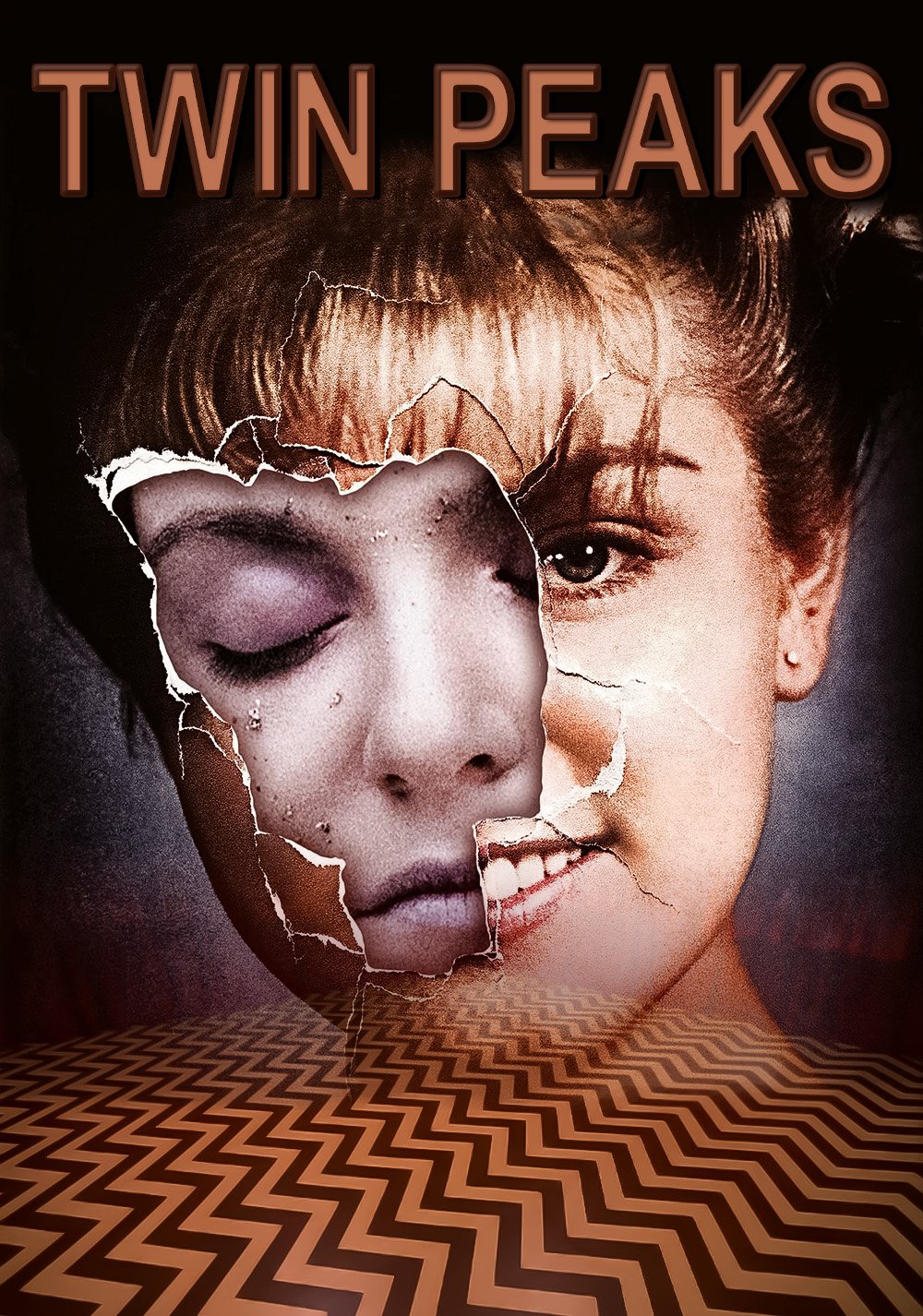
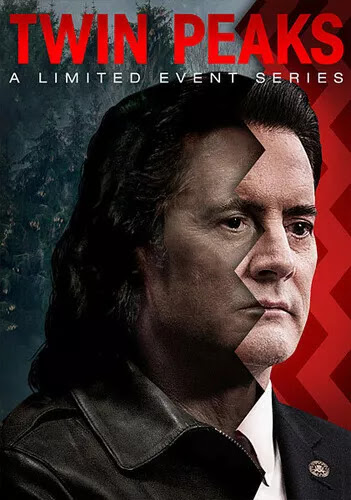
  🎬 I'm arriving very late to the party regarding the 1990-91 TV series TWIN PEAKS. I picked up this box set a few years ago, started watching it, and only made it through the first disc. It was enjoyable, but I just got distracted. So, I recently decided to start again from the beginning, and have completed the first four discs. Binging TWIN PEAKS can be an unsettling experience. But I'm enjoying its weirdness and want to see all of the mysteries get solved. I've been a David Lynch fan ever since I saw ERASERHEAD at a midnight movie in a local theater back around 1979. I even picked up the 2017 sequel when it was on sale at Barnes & Noble. This will take a while to get through, because binging, for me, can get old really fast.


This series first played thirty-four years ago, and yet I think of it as "modern" television. That's because my connection with whatever may-or-may-not be on TV has been severed for a very long time. I don't say that to sound like an elitist. It's really just a matter of practicality. I worked what's known as "second shift" most of my life. That means, usually, 3 PM-11 PM, or, for much of my working life, 3:30 PM-Midnight. This goes all the way back into the 1970s before the advent of home video. As someone who spent a lot of happy hours watching TV while growing up, probably way too many hours, I found myself cut off from the world of Prime Time. And I can't remember missing it all that much, to be honest. When the VHS era started, I was able to record occasional shows, but, still, that continuity with sitting and watching TV night after night was broken. Even on my nights off, I rarely watched anything. One major exception was SEINFELD. I discovered it one night when I had an unexpected night off and totally fell in love with that insane show, and now own the entire series. But that's about it. Even after nine years of retirement, I never even think about sitting down to watch an evening of television shows, network or otherwise. That's not to say that I haven't seen anything. But on those rare occasions when I find myself channel surfing, I haven't found much that captures my interest. I remember my dad talking about THE X-FILES, and he kept telling me I should start recording it. Eventually, I did start watching and collecting that show, after it had gone off the air. I still haven't watched many of the episodes. My evenings at home usually consist of relaxing in the movie room and watching old favorite movies from the collection or new titles, many of which are first watches. And I also watch old TV favorites that I remember from my lost youth, not to mention a lot of shows from the old days that I never got to see. For the most part, I continue to live in the cultural past, and I'm very happy to be there. But TWIN PEAKS, that "new" and much-discussed show, has entered into my radar. I am intrigued.


Sunday, June 2, 2024

JACKIE 2016


Natalie Portman deserves a lot of credit, and, some would say, an Academy Award, for the hard work she put into doing an imitation of Jacqueline Kennedy during the time of President John F. Kennedy's assassination, funeral, and the immediate aftermath. Miss Portman has the hair, makeup and early 1960s Jackie-esque fashion style down pat. She even strives, with somewhat mixed results, to imitate Mrs. Kennedy's soft, breathy speaking voice. As she is in nearly every scene in the film, her acceptance by audiences is crucial. 

The film begins shortly after the death and burial of JFK with the former First Lady giving an interview in which she attempts to either tell the truth, or fabricate a version, of the events of the assassination and give a summation of her husband's legacy. Her verbal sparring with the journalist (Billy Crudup) is interspersed with her memories of what happened on November 22, 1963, and the terrible days that followed.

Like many contemporary films that deal with historical figures and events, JACKIE does not tell its story in a linear pattern. Director Pablo Larrain jumps back and forth in time, almost scene by scene, showing various events during the years of the Kennedy presidency. One event that is carefully recreated is the tour of the White House conducted in 1961 by Mrs. Kennedy for television. The grainy black & white imagery looks very authentic, and for those of us who remember seeing the actual broadcast, the effort is indeed impressive. I would take issue, however, with the way the film portrays Mrs. Kennedy as somewhat awkward and unsure of herself. That is not how I remember it, and I have a copy of the broadcast that shows her being very gracious and dignified.

The depiction of this televised tour is one example of why I have problems with this film. Many of the characterizations don't ring true for me. My memories get in the way. When JFK was killed, I was twelve years old. Like so many in my generation, the events of that terrible week are ingrained forever in my mind and in my heart. John and Jackie have become almost mythical figures to me. No actors, no matter how talented, could ever convincingly portray them and cause me to care and respond as I still do to the authentic news coverage of those days. When it comes to President Kennedy and his First Lady, I have no objectivity. The sum total of what I believe about them, and what I wish to continue to believe, is contained in the reality TV footage from that historical era.

Jacqueline Kennedy was already a celebrity in her own right while she was in the White House, appearing on the covers of magazines, including movie magazines. As the years went on, and she reinvented herself as Jackie Onassis, her fame was stronger than ever. To me, however, she became less important. It was always nice to see pictures of her and hear the latest gossip, but her relevance was minimal. But when she died so unexpectedly at the age of sixty-four, my feelings about her changed. Suddenly, it was as though Jackie O had never existed. The beautiful lady who had passed away was Jacqueline Kennedy. I remembered how important she had been to my country, and I mourned for her. The rush of sadness I felt for losing her surprised and overwhelmed me.

I went to see JACKIE hoping to be moved by the familiar story and the performance of the leading actress, but I was not. Natalie Portman spends much of her time wandering through beautiful rooms, arrayed in gorgeous clothes, a dazed look on her face. The film does have its moments, however. The recreation of the shooting is very well realized. And there is an extended conversation between Jackie and brother-in-law Robert Kennedy (Peter Sarsgaard), where the two disagree about plans for the funeral, that comes across with excellent effect. 

The film has many good actors. Beth Grant, always a welcome presence in a movie, is perfectly cast as Lady Bird Johnson, but not much is seen of her. John Hurt is very good as a Catholic priest whom Jackie confides in before her husband's funeral. And Billy Crudup makes the most of his screen time as the journalist. Pablo Larrain is also responsible for directing the 2021 film SPENCER, a decidedly bizarre meditation on the life and trials of Princess Diana.

Many people who see JACKIE will no doubt find it poignant and realistic. And most people will love Natalie Portman's work. As for me, I choose to keep my memories as they are. Truth be told, I can't help it.


Monday, May 27, 2024

FILM CLASS OVERVIEW: SILENT FILMS-SESSION ONE Spring 2024


My Spring Semester non-credit film class was called Silent Films- Session One, so labeled by our instructor, film critic and scholar Chuck Koplinski. I have to say this was one of the best classes I've taken. It wasn't just for the quality of the films we watched, but the discussions were livelier and more interesting than usual. Even your humble blogger, somewhat shy by nature, felt relaxed enough to participate more and ask questions. Not sure why that would be the case, but I'm not complaining. As usual, Chuck's pre- and post-film presentations were filled with valuable information and visuals. Chuck presented the films in chronological order, from 1916-1929.


1. Our first film was HELL'S HINGES (1916), starring William S. Hart and Clara Williams. This was my first time seeing Hart, one of the biggest stars of the early silent era. He plays Blaze Tracy, a gunman who is considered to be the most dangerous man in a wild, untamed frontier town. When a young minister and his sister come to town to try and establish a church, the local rowdies do everything they can to destroy the man and his plans to bring religion and order into the town. But Blaze finds faith and comes to the aid of the minister while also falling in love with the sister, whose name just happens to be Faith. (!!) There is plenty of action, but the film is also a morality play. The film was surprisingly pristine for its age and quite enjoyable. Hart would continue making movies until 1928 and pass away in 1946.

2. THE FRESHMAN (1925), starring Harold Lloyd and Jobyna Ralston. He plays Harold Lamb, a naive young man entering college. Lamb believes he can make friends and become popular by imitating his movie idol, a character known as The College Hero. Instead of winning friends, his efforts make him the butt of jokes and derision, although the clueless guy isn't aware of it. After a series of mishaps, Lamb somehow manages to become the campus football champion. I must admit I wasn't all that fond of the movie. Lloyd is an energetic and creative actor, but the endless sight gags and slapstick comedy got to be way too much. Still, this was a successful film and is considered a classic. Lloyd had begun making short films in 1913 and started full length features in 1921. Many of his films are lost. He also worked in the sound era, making his last feature, MAD WEDNESDAY, in 1950.


3. FLESH AND THE DEVIL (1926), starring John Gilbert, Greta Garbo, Lars Hanson and Barbara Kent. Directed by Clarence Brown. Gilbert was the Number One leading man in Hollywood by this time. When his studio, MGM, paired him with the young, mysterious Garbo, in her third American film, the chemistry between the two ignited the screen. The story of a love triangle that shattered the lifelong friendship between two men was pure melodrama. But the sincere, emotional performances of Gilbert, Garbo and Hanson made it work. Miss Garbo and Mr. Gilbert would fall in love during the making of this picture and have a long relationship. They would make three more pictures together, including QUEEN CHRISTINA (1933) in the sound era. She would make a total of seven films with director Clarence Brown. I was surprised to learn that a few of my classmates had never seen a Garbo film, and one of them found her to be totally unimpressive. It's hard for me to understand that, as, for me, she is pure magic onscreen.

4. THE UNKNOWN (1927), starring Lon Chaney, Norman Kerry and Joan Crawford. Directed by Tod Browning. This is regarded as a masterpiece of the silent era, and the best of the ten films Chaney and Browning made together. It also features an excellent performance by the young Joan Crawford, making her an important star at MGM. Chaney plays Alonzo, an armless circus performer who uses his feet to throw knives at his partner, Nanon (Crawford). In truth, Alonzo is only pretending to be armless. But he is in love with Nanon, and when he learns she has a deadly fear of men's arms, he has his arms amputated in order to win her love. His actions lead to tragedy. This is an amazingly intense, and rather depressing film. And yet, I found it impossible to look away. Chaney's uncanny ability to transform himself physically in order to inhabit a characterization is on full display here. I've only begun to explore the films of Lon Chaney, and I look forward to seeing more of his work.

5. SUNRISE: A SONG OF TWO HUMANS (1927), starring George O'Brien, Janet Gaynor and Margaret Livingston. Directed by F.W. Murnau, a German making his American film debut. This was truly the crown jewel of all the films shown to the class. If I had to choose one film to show to someone who had never experienced a silent picture, this is the one I would pick. The story is a morality play about love, temptation, sin and redemption. O'Brien lives a simple rural life with his faithful wife, Gaynor. But when he falls for the charms of a promiscuous woman from the city (Livingston), he decides to kill his wife and run off with the other woman. But he is unable to go through with it. His wife runs away from him and goes to the city. He follows her, winning her love and trust as they go on an adventure in the city together. This film was one of the first to use a soundtrack with music and effects, but it had no spoken dialogue. In fact, it also had very few dialogue cards. The story was conveyed by the movements and facial expressions of the actors. Murnau brought his method of German expressionism to the film, and the imagery is incredible. Miss Gaynor was the winner of the first Academy Award for Best Actress.

6. IT (1927), starring Clara Bow and Antonio Moreno. This was the film that brought Miss Bow to stardom and gave her the title of The "IT" Girl. The film was written by Elinor Glyn, based on her serialized novella of the same name. At the beginning of the film, "it" is defined the "quality possessed by some which draws all others with its magnetic force". In other words, sex appeal. Clara Bow became one of the most popular movie stars in the world after this film became a hit. The story, all about a shop girl who falls for her boss, even though she doesn't fit into his upper-class world, wasn't that original. But Bow was. I'd never seen hir in a silent film, only in one of the few films she made in the early sound era. I was really impressed with her beauty and talent. It's easy to see why the public fell in love with her.

7. SHOW PEOPLE (1928), starring Marion Davies and William Haines. Directed by King Vidor. This was another first for me, as I had never seen Marion Davies in a movie. She was quite enjoyable in this story of a young naive girl, Peggy Pepper, who goes to Hollywood determined to become a movie star. After a series of comical mishaps and misunderstandings, she finds success. This a good example of Hollywood taking a look at itself, and it works beautifully. This is another film that featured a synchronized soundtrack, but no spoken dialogue. The film features cameo appearances by some of the big stars of the day: John Gilbert, Charlie Chaplin, Douglas Fairbanks and William S. Hart. Vidor also appears as himself, as does Davies in a scene with her onscreen character, Peggy. Chuck provided some interesting background on Davies' life and career, including her long relationship with the very powerful and very married William Randolph Hearst. Because of the film CITIZEN KANE (1941), which was based on Hearst, the real Davies has been unfairly compared to the tragic Susan Alexander, the no-talent opera singer played by Dorothy Comingore. In truth, Davies was a talented comedienne and a very successful film star well into the sound era.

8. PANDORA'S BOX (1929), starring Louise Brooks, Francis Lederer and Fritz Kortner. Directed by G.W. Pabst. An amazing German classic. American actress Brooks found enduring stardom playing the tragic Lulu in this surprisingly frank adaptation of two plays by Frank Wedekind. Lulu is a dancer, a free spirit, who is seemingly unaware of her sexual power over men and women. Or is she aware? Brooks, like Garbo, has the ability to convey everything with her eyes and her subtle movements. The story takes Lulu from man to man, from a state of high life to the lowest depths of despair, and to a tragic demise. The film was one of the first to show Lesbian attraction and was very sophisticated and adult in every way. Brooks would work for Pabst again that same year in DIARY OF A LOST GIRL, which I actually prefer over PANDORA'S BOX. There was a lot of detailed discussion about the life and career of Louise Brooks, one of the most fascinating true stories of a Hollywood actress reaching the pinnacle of fame and then falling into obscurity. But in the case of Louise Brooks, there was also a stunning rediscovery and a reemergence into the limelight years after her film career had ended. She is a talent worth studying and PANDORA'S BOX is a good starting point.

Chuck's Fall Semester class is going to continue with silent films. I can't wait! Let's get this long, hot Summer over with.


Saturday, May 4, 2024

A MAN COULD GET KILLED (1966)


This convoluted spoof of the spy movies of the 1960s is a real obscurity. The story, should you choose to try and follow it, involves a search for stolen diamonds in Lisbon and the killing of a government agent. Enter William Beddoes (James Garner), an American banker, who is mistaken for the agent sent to replace the dead one. Beddoes is reluctantly pulled into the world of spy/counter spy along with the dead agent's lover (Melina Mercouri). Also dragged into the confusion are an American smuggler (Tony Franciosa) who gets romantically involved with an American girl (Sandra Dee). Much of the screen time features the four stars engaging in various car chases throughout the Portuguese countryside.

Apparently, there was more excitement behind the camera than in front. James Garner and Tony Franciosa didn't get along and their one screen fight turned into a near brawl. The original director, Cliff Owen, was replaced by Ronald Neame, which made the production go on longer than intended. Sandra Dee was near the end of her career as a star actress at Universal and begged the studio not to make her do the picture. Miss Dee: "So I spent a miserable four months in Lisbon, little fishing villages and Rome, making a picture that should have taken eight weeks. We had two changes of directors, and I ended up playing COME SEPTEMBER, all over again." James Garner called the film "disappointing".


The most memorable thing about the film is the lovely theme music by Bert Kaempfert, which won a Golden Globe for Best Song in a Motion Picture. The theme, originally called Beddy Bye, was later given lyrics and became the hit song Strangers in the Night when recorded by Frank Sinatra.

Tony Franciosa, Sandra Dee and James Garner