FILM REVIEWS, COLLECTION UPDATES, COMMENTS ON CINEMATIC CULTURE

Tuesday, May 31, 2022

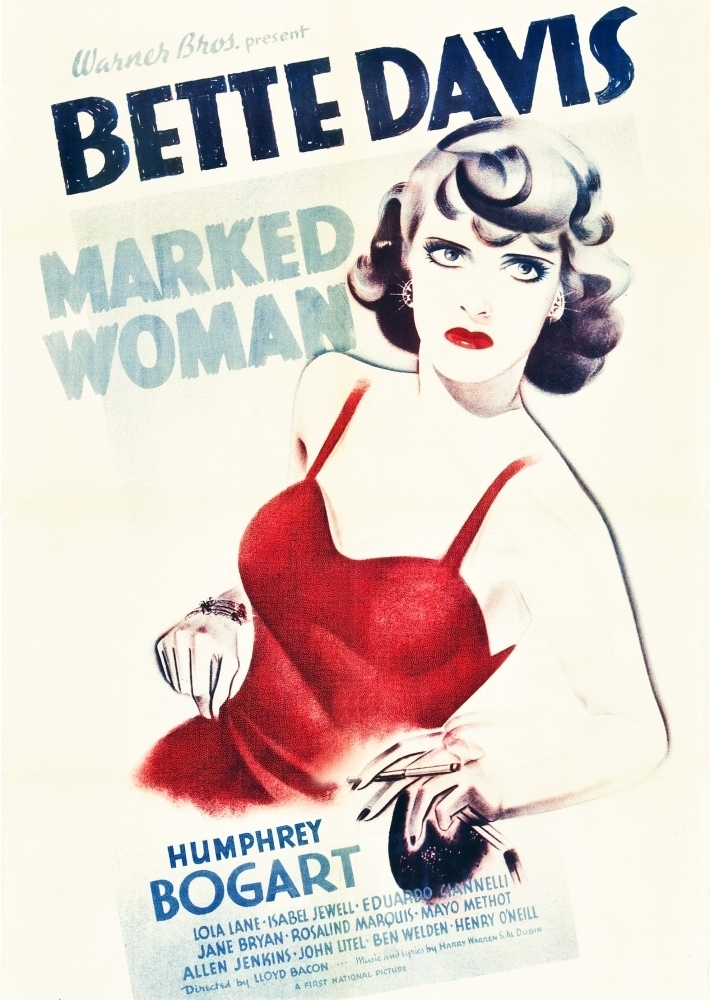
MARKED WOMAN (1937)

Legendary actress Bette Davis did the television talk show circuit quite frequently during her long career, even during her last years when her health was seriously compromised. One of her best interviews was on The Dick Cavett Show in 1971. This is the infamous interview where Mr. Cavett impulsively asked the star how she lost her virginity. What could have turned into a very awkward moment was instead turned into a classic Bette Davis moment when she answered Cavett with: "I'll TELL you!" (Spoiler alert: It happened on her wedding night.) Miss Davis was obviously enjoying her talk with Cavett and was more than able to keep up with the man's quirky sense of humor. She also gave a lot of insight into her career and her feelings about the craft of acting. At one point she was discussing the differences in making films in the Golden Age of Hollywood and the contemporary era. She had this to say about the new emphasis on realism in the early 1970's:

"I think acting should look as if we were working a little. I think it should be a little larger than life, a little bit theatrical."

Fans of Miss Davis, or any other star from the Golden Age, will be able to relate to this comment. One of the enduring pleasures of watching classic films is getting to know the stars for their personalities as well as their different roles. Bette Davis has certainly created some memorable characterizations on the screen. Just look at her immersion into the role of Mildred Rogers in OF HUMAN BONDAGE (1934), Cockney accent and all. But that "larger than life" quality was always a part of every performance the lady gave. Somehow this great actress was able to convey to her audiences how much she was enjoying the work she was doing for them, and for herself.

MARKED WOMAN is a well-made, enjoyable film on several levels. It is also an important milestone in Bette Davis' career. This is the first film assignment the actress was given after the court battle she and Warner Brothers had gone through in 1936. Miss Davis had gone on suspension for refusing a film that Jack Warner had chosen for her. She then signed with another producer, resulting in her being sued by her employers for breach of contract. She countersued in an attempt to be free of the contract, but Warners won the case. But Davis managed to win the respect of Jack Warner, who began offering her the kind of quality scripts she had been fighting for. MARKED WOMAN began a long series of successful, critically acclaimed films that made Bette Davis the most important actress on the screen. 

As the film opens, we are carried once again into the familiar Warner Brothers world of gangsters and other denizens of the urban underworld. Mobster Johnny Vanning (Eduardo Ciannelli), has gained control of the nightspot Club Intime, changing its name to Club Intimate. As he takes ownership of his new domain, he tells the women working as hostesses that they are now working in a "clip joint", meaning they have to hustle the customers to drink and gamble as much as possible. Vanning warns the women that they'd better follow his orders because he now controls the vice industry all over town. The hostesses are Mary Dwight Strauber (Bette Davis), Dorothy "Gabby" Marvin (Lola Lane), Emmy Lou Eagan (Isabel Jewell), Florrie Liggett (Rosalind Marquis), and Estelle Porter (Mayo Methot). The women aren't happy with this new arrangement, but realize they have no choice. (SPOILERS FROM THIS POINT ON.) One night, Mary is ordered to encourage a customer to gamble recklessly, and he writes a bad check to the club. He doesn't think he will get into any trouble, but Mary tells him otherwise. She tells him to get out of town in a hurry. But Vanning's men follow him to his hotel and kill him.

Gorgeous, theatrical, and much larger than life, Bette Davis.

Mary's younger sister, Betty (Jane Bryan), a college student, arrives for a surprise visit to the apartment Mary shares with the other four hostesses. Mary has been supporting Betty's education while claiming to work as a model. She wants to hide her true vocation from her sister. But the police arrive and take all the women, Betty included, to headquarters to question them about the man who was murdered. District Attorney David Graham (Humphrey Bogart) is hoping he can use the women's testimony to bring Vanning and his men to trial and put an end to their criminal activity. But Mary and the others refuse to cooperate out of fear and Vanning and his men go free. Betty now knows what Mary's real occupation is and tells her she can never go back to college after all the negative newspaper coverage. She decides one night to go to a party with Emmy Lou, where Vanning hooks her up with an older businessman. Betty has drinks with the man, not knowing everything that is expected of her. She leaves the party and arrives home just as Mary is coming back from the club. Mary tells Betty she was a fool to go to that kind of a party. She and Betty argue and Betty angrily decides to go back to the party. Once again she meets up with the businessman. When he tries to manhandle her, she resists. Vanning tells her to do what the man wants. When Betty refuses, Vanning assaults her, knocking her down a flight of stairs. She is seriously injured, and Vanning tells his men to dump her into the river. Emmy Lou witnesses everything.

Jane Bryan and Bette Davis


When Emmy Lou returns to the apartment, she tells Mary she doesn't know where Betty is. Mary goes to Graham for help, but he tells her there's nothing he can do. While in his office, Mary learns that Betty's body has been found. Mary resolves to testify against Vanning and his men, but they try to silence her by beating her severely and using a knife to mark her face with a cross. She defies Vanning and convinces the other women to help her. Vanning and his men are convicted. David Graham is being hailed as a hero, while the five women walk away into the night, unsure of their future.

Mayo Methot and Bette Davis


Bette Davis insisted on wearing this realistic makeup.


Rosalind Marquis, Mayo Methot, Lola Lane, Bette Davis, Isabel Jewell, and Jane Bryan.


After the opening credits, there is a disclaimer saying that the stary is fictional, etc., etc. The truth is, the story is inspired by the real-life trial of mobster Lucky Luciano, who ran a huge prostitution ring. It was the testimony of several prostitutes, and the hard work of legendary district attorney Thomas Dewey, that got him convicted. Because of censorship restraints, the women in the film had to be classified as "hostesses". There is some suggestiveness that their job description might call for a little more than that. For instance, when Mary is testifying in court, she admits that the women sometimes entertain their customers outside of the Club Intimate. This all left up to the viewer's imagination. 

Bette Davis' energetic and highly theatrical portrayal of Mary is the centerpiece of the film, and she is exciting to watch. The fact that Miss Davis does not look like, sound like, or act like a world-weary, downtrodden nightclub hostess at any point in the film takes nothing away from the success of her performance or the believability of the story. This is a great star using her full power to bring life to a character while letting her audience know that she IS a great star and having the time of her life. Listening to Mary's/Bette's sophisticated diction gives the impression that the character is most likely a Bryn Mawr graduate who majored in English Literature with a minor in Nightclub Hostess Science. The other actresses have the world-weary thing going on perfectly, especially Lola Lane and Mayo Methot. Miss Lane was only two years older than Bette Davis, but looks much older. She provides quite a bit of emotional impact when she talks about a man she once loved who was killed by Vanning years before. Mayo Methot is totally believable as a woman who's getting older and reacts to her hopeless situation with cynicism and anger. Rosalind Marquis doesn't have much dialogue in the film, but she does sing a good blues number called My Silver Dollar Man. Isabel Jewell as Emmy Lou is glamorous and flirtatious, but rises to the dramatic occasion when it's called for.

Humphrey Bogart gives a good performance as David Graham. It is a credit to the actor's versatility and talent that he is convincing as an upright man of the law only one year after his incredible portrayal of gangster Duke Mantee in THE PETRIFIED FOREST. He and Miss Davis have good chemistry in their scenes together. It was during the filming of MARKED WOMAN that Bogart met Mayo Methot and they were soon married. Jane Bryan was an up-and-coming contract player at Warners who gave up her career for a long, happy marriage. She played Bette Davis' daughter in THE OLD MAID (1939). Some familiar Warners contract players also appear in the film, such as Allen Jenkins and John Litel.

Prolific director Lloyd Bacon was at the helm, with uncredited assistance from Michael Curtiz.

The closing scene, with the hostesses walking away and disappearing into the foggy night is very Noirish and moving. One almost expects Bette Davis to emerge from the fog and back into camera range, bowing to her audience, a triumphant smile on her face. As wonderful as that would have been, we can all thank her for showing restraint.

Bette Davis and Humphrey Bogart


Thursday, May 19, 2022

HOW BAD CAN THEY BE? BRIEF, SNARKY COMMENTARIES ON FILMS I DIDN'T LIKE.

 Sometimes negativity can be extremely healthy. Not to mention loads of fun. Here are some one-star movies I managed to sit through. Comments are always welcome. Let me know if I trashed one of your favorites.

DIMPLES (1936) 

One of Shirley Temple's least likable vehicles. By 1936, Little Miss Perfect was starting to lose some of the magic that had made her a star. It doesn't help matters that the story here is derivative and dull. Once again, she's the adorable orphan who's being cared for by a lovable but slightly crooked adult, this time Frank Morgan, three years before he landed in Oz and achieved cinematic immortality. The dullness of the story is interrupted (too) frequently by equally dull songs and dances, all performed by Miss Temple, while the other cast members look on adoringly. We also get treated to a performance of Uncle Tom's Cabin with Miss Temple playing Little Eva and everyone else wearing blackface. The finale is a lively minstrel number complete with tambourines. Skip this one and go watch BRIGHT EYES (1934) again.

BURNT OFFERINGS (1976)

I saw this film when it was first released and thought it was an exercise in overkill. Recently I watched it again after forty-some years. It hasn't necessarily improved with time. It's a fairly ridiculous horror film with some atmospheric sets and one or two impressive moments. Bette Davis chews every bit of scenery she can sink her dentures into. Oliver Reed seethes with an intensity that isn't warranted by the silly story. And Karen Black is stuck somewhere in the middle, trying to bring life to a poorly conceived character. With Eileen Heckart and Burgess Meredith. Directed by Dan Curtis, the creator of DARK SHADOWS.

BEYOND THERAPY (1981)

Absolutely one of the worst movies I've ever seen. Robert Altman must have been binge-watching Woody Allen movies while smoking crystal meth. I never dreamed it would be possible to make Glenda Jackson look like an amateur. We won't even discuss Julie Haggerty or Tom Conti. Christopher Guest manages to generate a few laughs. Jeff Goldblum does NOT transform into a half human/half fly creature, although it could only have helped the movie. There are three complete renditions of the song Someone To Watch Over Me, by Linda Ronstadt, Lena Horne, and Yves Montand. You'll never want to hear the song again after this ordeal is over.


BEWARE! THE BLOB! (1972)

This movie is so bad. So unbelievably bad. The word "bad" isn't nearly bad enough to describe it. Larry Hagman directed. Why he would do such a wretched thing remains a mystery. Maybe he hated humanity and wanted us all to suffer. Beware this movie!!


OUIJA: SUMMONING (2015)

An ill-advised encounter with a Ouija board unleashes an evil murderous spirit that attaches itself to an irritating teenage girl. As she becomes even more irritating with each successive scene, half the cast winds up dead. This includes a priest, who shows up in the middle of the movie to sprinkle holy water on everything in sight, while looking as pensive as humanly possible. If you happen to be a jump scare junkie, then you can get your fix here. Otherwise, the only other things that rate a thumbs up are the dark atmosphere and the decent cinematography, attributes that can be found in even the cheapest of horror flicks these days. But not even atmosphere can overcome a weak story and a total lack of anything resembling logic. Best advice to anyone encountering a Ouija board: Break it in half and run in the other direction.

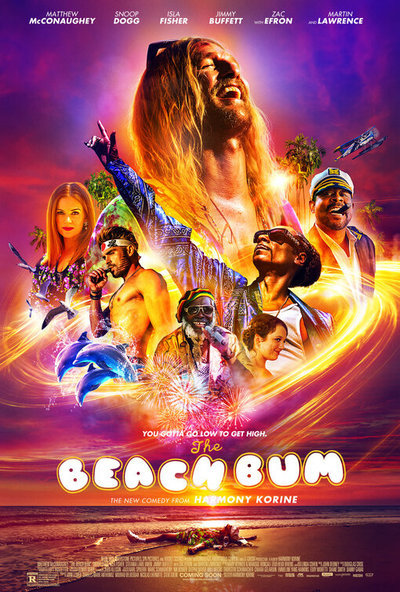
BEACH BUM (2019)

Another gift to the universe from Harmony Korine, the creative genius who previously blessed us with TRASH HUMPERS (2009). There is no need for spoiler alerts when discussing this movie. There is no story, no character development, and not much of anything else either. Matthew McConaughey totally negates any progress he made as a serious actor by playing an unlikable character named Moondog, who is an older version of the overgrown adolescent he played in DAZED AND CONFUSED. To accompany Moondog, we also have Snoop Dog, a rapper turned non-actor. Mr. Dog stands in front of the camera reciting lines in the same lifeless monotone he uses in his stellar rap concoctions. Isla Fisher, who proved herself a good actress in NOCTURNAL ANIMALS, dies early in this film. Wise decision.

INCEPTION (2010)

I don't want to seem overly presumptuous here, but there is a slightly remote possibility that, in some small way, I may have come somewhat close to, perhaps, reaching a kind of understanding of what this film may or may not be about. There were many explosions. An abundance of noise. Occasionally, people jumped off of buildings. 

At the end, everyone seemed happy. I'll hold on to that.


Saturday, April 23, 2022

GORILLA AT LARGE (1954)


 Some very strange things happened to Anne Bancroft during the years before she achieved stardom and won an Oscar for Best Actress for THE MIRACLE WORKER (1962). As a contract player at 20th Century-Fox in the 1950's, she was cast in a variety of supporting and leading roles in B movies. In GORILLA AT LARGE she found herself cast as a trapeze artist in an amusement park side show performing a daring routine with a rather insipid looking gorilla. When her character, Laverne, isn't consorting with her hairy cohort, she's busy managing all the men in her life. One of them is her husband, Raymond Burr, the owner of the park. Another is top-billed Cameron Mitchell, sporting an orange-colored hairstyle, as a young guy Laverne recruits into her act, while also attempting to recruit him into her bed. There are other assorted gents mixed-up with Laverne, including a disgruntled ex-husband who happens to be the trainer of the aforementioned gorilla.

Anne Bancroft's initial reaction to the script of Gorilla At Large.

As the story progresses, and Lavere's overactive pheromones unleash all manner of aggressive male reactions, various cast members began dropping dead with broken necks. The logical culprit appears to be the gorilla. However, there is also someone running around the park in a gorilla suit, which tends to complicate matters. But don't worry. Cynical cop Lee J. Cobb arrives on the scene to harass everyone unmercifully until he nails the killer. He is ably assisted by detective Warren Stevens and bumbling cop Lee Marvin.

Lee Marvin looking justifiably perplexed.

Pay close attention here. The "real" gorilla in the film is played most of the time by someone in a gorilla suit. The killer is someone in a gorilla suit who is pretending to be the "real" gorilla...someone in a gorilla suit. You may need a drink right now.

Miss Bancroft is slinky and sexy, while Mitchell does a good job as an overaged Boy Scout. Burr is his usual intense pre-Perry Mason self. But the acting honors go to the various gorillas, real or otherwise.

Directed by Harmon Jones. In Technicolor. Originally released in 3-D.


Wednesday, April 20, 2022

THUNDER ALLEY (1967)

 With the release of THUNDER ALLEY, American-International Pictures was continuing its movement toward more adult themes and characterizations. Since its inception in the 1950's, the studio had made millions by producing films geared toward the youth culture. In the 1960's, the studio found huge success with its colorful horror film series, mostly directed by Roger Corman, and its series of inane but entertaining Beach Party movies.  As social and sexual mores began to change rapidly in the 1960's, AIP once again changed its focus. They left behind the dark, Gothic castles and the sandy California shoreline and headed for the mean highways of Corman's THE WILD ANGELS (1966). While the biker films were becoming popular, AIP also took its cameras down to the racetrack with FIREBALL 500 (1966), recycling their two iconic Beach Party thespians Frankie Avalon and Annette Funicello, now fully clothed and trading in the suntan lotion for motor oil. And they added yet another former teen idol from the 50's, Fabian, who was under contract to AIP for several years, beginning in 1965. The racetrack films, like the biker films, were not made as a series, but as stand-alone productions. With THUNDER ALLEY, Frankie and Annette's long, difficult relationship was finally ended (the horror!) and her new leading man was Fabian, at least for one picture.


Annette received top billing for the first and only time with this movie. It was also the end of her career as a star actress. She had been in show business since the age of twelve, first under contract to Walt Disney and then to AIP. For a while she was working for both studios at the same time. Now twenty-four, married, and the mother of a little girl, Annette was more dedicated to her family life than life as a movie star. THUNDER ALLEY fulfilled the requirements of her AIP contract. What's fascinating about that particular development is that this film gives her the chance to do some serious acting and she does a surprisingly good job. In fact, she gives the best performance of her career, perhaps even better than her likable comedic turn in BEACH PARTY (1963). Of course, it must be said that the concept of "serious acting" had a different meaning in an AIP racetrack epic than it did for more mainstream Hollywood movies. Still, Annette shows considerable promise as an adult actress, and her fans can only wonder what her career may have been like if she had chosen to continue making films. 

She is joined by a good cast of actors. Fabian, now retired from his brief career as a pop singer, had a natural, masculine, easy-going acting style. Beautiful Diane McBain had a sexy kind of sophistication all her own. And Warren Berlinger, another young actor associated with teenage roles like BLUE DENIM (1959) and BECAUSE THEY'RE YOUNG (1960) was also very intense and energetic. The cast is rounded out with comedian and sometime actor Jan Murray, who had been quite impressive in the cult classic WHO KILLED TEDDY BEAR?
 (1965).

Fabian plays racer Tommy Callahan, who is troubled by blackouts during races. One such incident causes the death of another driver, and Tommy's career is seemingly over. He takes a job with Pete Madsen's (Murray) stunt driving show and gets to know Madsen's daughter, Francie (Funicello) and her boyfriend, Eddie (Berlinger), both of whom are drivers in the show. Tommy has brought along his latest girlfriend, Annie (McBain), a "track tramp" he has picked up along the circuit. As Tommy and Francie began to be interested in each other, he is given a chance to resume racing. He tries to find out what is causing his blackouts, finally realizing they are associated with something that happened when he was a child. Meanwhile, there are romantic conflicts, a few fights, and more racing footage than most people could possibly ever want.

That's about it, story wise. There's nothing terribly profound going on in this unpretentious B-flick, but for the most part, the movie is well-made. The director, Richard Rush, also made THE SAVAGE SEVEN (1968) and the excellent PSYCH-OUT (1968) for AIP. If there are any drawbacks, they have to do with the script. As good as Annette is, she is letdown by some of the dialogue she has to deliver. When her father asks Francie if she wants Tommy for herself, her response is: "I want him so bad, I ache." It's difficult to imagine even Bette Davis being able to get by with a ridiculous line like that. There is another scene where Francie has gotten herself drunk and is driving recklessly around the track until stopped by Tommy. The scene doesn't come off well, and it's a little uncomfortable for those of us who love Annette to see her doing something so embarrassing. She fares much better in a confrontation with McBain where the two women are discussing their mutual interest in Mr. Callahan. McBain is much more suited for this kind of thing, having played bad girls in films like PARRISH (1961), but Annette makes a formidable adversary. The movie also features some very lame "comedy" relief from bit players like Maureen Arthur, cast as a supposedly sexy track tramp. Most of these moments could have been cut from the movie with no sense of loss. 


One only has to look at the posters and lobby cards for THUNDER ALLEY to see what AIP was trying to promote with the film. "Days of Screaming Wheels...Nights of Reckless Pleasure." "Their God is Speed...Their Pleasure an 'Anytime' Girl." Not exactly the kind of details usually associated with an ex-Mouseketeer. Nothing explicit is shown during the film's 89-minute running time, but there are some things that tend to push the envelope beyond Beach flick standards. Tommy and Annie are obviously involved in an intimate relationship. And there is an extended wild party scene where things get, well, pretty wild. And there is a scene where Eddie, jealous of Francie's obvious attraction to Tommy, gets rough with her when dropping her off from a date and refers to her as a track tramp. Who knows? Maybe doing scenes like this played a part in Annette's decision to drop out of acting. She does get to sing one song when the party scene is just beginning. It's called "When You Get What You Want" and was composed by Guy Hemric and Jerry Styner.  It was without a doubt the best singing performance she gave since her pop princess days with Disney. It's a lovely moment for her, fashionably dressed and interacting with the musicians. A fitting swan song. It's interesting to note that Annette virtually disappears from the party scene as it goes from wild to crazy and beyond. Seeing her in such an atmosphere would have been as uncomfortable and inappropriate as her attempted drunk driving scene.

Despite a few negative points, THUNDER ALLEY is another fun watch from the good folks at American-International. And the incessantly played title song, also composed by Hemric and Styner, will remain in your head for quite a while after the movie ends. Be forewarned!


Friday, April 15, 2022

FILM DIARY FOR MARCH 2022: GARBO TALKS AND DENNIS HOPPER LOSES HIS HEAD

 The cold, dark, rainy month of March provided an ideal environment to relax in the movie room and indulge in cinematic fantasy. I focused on three very dissimilar show business legends: Greta Garbo, Humphrey Bogart and Elvis Presley. The fact that these three legendary figures have absolutely no connection to each other shows how "all over the place" my interest in films has become. I sometimes wish I could be fanatically devoted to only one genre, like horror, for example. That would save me a lot of money, not to mention shelf space. I have the complete collection of Elvis' theatrical features, and most of his concert films as well. This is a little bit strange, considering that during my teenage years in the 1960's I saw only a few of his movies when they played in theaters. To be honest, I started collecting his films because they were so cheaply priced in the catalogs I received every month from Oldies.com. Most of them sat on the shelves unopened for quite a long time before I was curious enough to watch them. I always liked Elvis Presley, but I've never been a diehard fan. His early films were his best, not just for the quality of the music, but because they gave him a chance to do some serious acting. Elvis had a lot of potential as an actor. But it would seem that his manager, the infamous Col. Tom Parker, had other plans. After G.I. BLUES and BLUE HAWAII came out and made tons of cash, most of Elvis' films fell into a pattern of general mediocrity for the remainder of the decade. I decided to watch a few of his movies after all these years. HARUM SCARUM (1965), KISSIN'COUSINS (1964), FUN IN ACAPULCO (1963), and GIRLS! GIRLS! GIRLS! (1962) were all first watches. Each one was as somniferous as the one before it. I was almost relieved to have found a cure for my chronic insomnia. SPEEDWAY (1968) was one of the Elvis flicks I saw at the show, and I remembered liking it. Watching it again after all this time was less than exciting. The two best things about it were the hit song "Let Yourself Go", which I had owned as a 45 RPM single back in 1968, and the refreshing presence of Nancy Sinatra, one of Elvis' more interesting leading ladies. 


 The one pleasant surprise in my Presley experience was the 1962 release KID GALAHAD, with Elvis playing a prize fighter. A very loose remake of the 1937 classic starring Edward G. Robinson and Bette Davis, this gave Elvis one of his last opportunities to do some serious acting, and he does a good job. And he's supported by a decent cast of actors: Lola Albright, Gig Young, Joan Blackman, and Charles Bronson. There are still too many totally forgettable songs, but the film makes a good dramatic point. It's light years away from something like KISSIN' COUSINS.


My interest in the Divine Garbo had intensified after reading the wonderful biography by Robert Gottlieb. (See my review posted 3/31/22.) After getting deep into the book, I sent away for several of Garbo's films, most of which I'd never seen. A Garbo marathon that began in February continued in March, beginning with the star's sound debut in ANNA CHRISTIE (1930), which I had seen before. This was followed by her silent classics: JOYLESS STREET (1925), and TORRENT (1926), her American debut.

Garbo in her MGM film debut, TORRENT.

Other Garbo films that I watched this month: SUSAN LENOX: HER FALL AND RISE (1931), in which she worked with Clark Gable, the man who would soon be known as the King of MGM, ROMANCE (1930), THE PAINTED VEIL (1934), and her final film, TWO-FACED WOMAN (1941). The latter film has taken a lot of criticism over the years as the movie that ended Garbo's career. But after this re-watch, I found myself appreciating it more than I had previously.

Greta Garbo and Clark Gable in SUSAN LENOX: HER FALL AND RISE in 1931.


Humphrey Bogart has become one of my favorite actors in the last few years. As I've had the chance to see more of his films, I've come to realize how versatile he was, and how totally unique he was, and still is to this day. I've had a copy of THE CAINE MUTINY (1954) sitting on the shelves for quite a while, and decided to finally watch it. He gives an incredible performance, as do his co-stars Fred McMurray, Jose Ferrer, Van Johnson, and Robert Francis. I decided to send away for more of his films from Oldies.com. Some of them arrived this month, and I'm waiting for several others. One item I purchased was the SILVER SCREEN ICONS box set containing four of his best films: THEY DRIVE BY NIGHT (1940), ACROSS THE PACIFIC (1942), ACTION IN THE NORTH ATLANTIC (1943), and PASSAGE TO MARSIELLES (1944), all first watches and thoroughly enjoyable. I also picked up a Bogart title I'd never heard of, YOU CAN'T GET AWAY WITH MURDER (1939), in which he plays one of his most evil gangster characters, and plays it to the hilt.


While I was having a great time being immersed in Hollywood's Golden Age, I suddenly found myself in a Mario Bava frame of mind. It must have been the cold, dark weather. I decided it was high time to re-watch one of his classic Gothic horror films, KILL, BABY...KILL (1966). This film is so overflowing with atmosphere and color, it's a visual feast. A triumph of style over story, it proves that Bava was every bit as masterful at using color film as he was with black & white. 


And, finally, we get around to Dennis Hopper losing his head. SPEED (1994) is another DVD I've had on the shelf for years, unopened, and gathering dust. I actually saw the movie on cable a long time ago and remember liking it. Action movies with little more than explosions and gratuitous violence are really not my thing. In fact, I like them less and less as I get older. But if I have to choose one film in this genre that best combines all of the noise and destruction with a likable, well-written human story, SPEED would have to be it. Dennis Hopper was already in my thoughts because I had just received the Severin Films release of his 1980 cult movie OUT OF THE BLUE. So I decided to give SPEED another watch. I have to admit I had a great time. Talk about guilty pleasures! Seeing Hopper play crazy as no one else can was a perfect way to wind up the month of March.


Dennis Hopper in SPEED. Not the kind of guy you want to meet on the subway.


Friday, April 8, 2022

KINO-LORBER SPRING 2022 SALE


The fine folks at Kino-Lorber are at it once again, extending their cinematic tentacles into my wallet. Here is my most recent journey into Blu-ray hoarding.

THE ROAD TO SALINA (1970)
Starring Mimsy Farmer, Robert Walker, and Rita Hayworth.


THE OSCAR (1967)

Starring Stephen Boyd, Elke Sommer, Tony Bennett, Jill St. John, Eleanor Parker, and Joseph Cotten.


THE BLOODY BROOD (1959)
Starring Peter Falk.


PRIVILEGE (1967)
Starring Paul Jones and Jean Shrimpton.


NOT WANTED (1949)
Starring Sally Forrest, Keefe Brasselle, and Leo Penn.


FATHER HOOD (1993)
Starring Patrick Swayze and Halle Berry.


NO TIME FOR LOVE (1943)
Starring Claudette Colbert and Fred MacMurray.


LARCENY (1948) 
Starring John Payne, Joan Caulfield, Dan Duryea, and Shelley Winters.


DOUBLE DOOR (1934)
Starring Evelyn Venable, Mary Morris, Anne Revere, and Kent Taylor.


BROKEN LULLABY (1932)
Starring Lionel Barrymore and Nancy Carroll.


THE MIND BENDERS (1963)
Starring Dirk Bogarde and Mary Ure.


I AM HEATH LEDGER (2017)


THE HOMECOMING (1973)
Starring Paul Rogers and Ian Holm


WAY DOWN EAST (1920)
Starring Lillian Gish and Richard Barthelmess.


EXPRESSO BONGO (1959)
Starring Laurence Harvey, Cliff Richard, and Sylvia Syms.


THE HUNCHBACK OF NOTRE DAME (1923)
Starring Lon Chaney.


THE NIGHTCOMERS (1971)
Starring Marlon Brando.


DIABOLICALLY YOURS (1967)
Starring Alain Delon and Senta Berger.


ENDLESS NIGHT (1972)
Starring Hayley Mills, Hywel Bennett, and Britt Ekland.


DESIRE (1936)
Starring Marlene Dietrich and Gary Cooper.


DESPERATELY SEEKING SUSAN (1985)
Starring Rosanna Arquette, Aidan Quinn, and Madonna.


FOOL FOR LOVE (1985)
Starring Sam Shephard, Kim Basinger, Randy Quaid, and Harry Dean Stanton.


ONE POTATO, TWO POTATO (1964)
Starring Barbara Barrie and Bernie Hamilton.


DRAGNET (1954)
Starring Jack Webb, Ben Alexander, Richard Boone, and Ann Robinson.


DALEK'S INVASION EARTH 2150 A.D. (1966)
Starring Peter Cushing.


SUSPECT (1944)
Starring Charles Laughton and Ella Raines.


THE MARTIAN CHRONICLES (1980)
Starring Rock Hudson.


YELLOW SKY (1948)
Starring Gregory Peck, Anne Baxter, and Richard Widmark.